
Key Takeaways:
- When weighing Optomap vs. dilation, both exams give your doctor a clear view of the retina to screen for early eye disease.
- For most patients across the Twin Cities, an eye exam without dilation is a complete screening on its own, using a quick, drop-free Optomap scan.
- Optomap requires no drops and no recovery time, so you can drive yourself home right after.
You booked the eye exam, but there’s one thing nagging at you: the eye drops. The afternoon of blur, the squint on the drive home, and the sunglasses you’ll need at your own kitchen table. These are why so many patients ask us the same thing before they even sit down: is there an eye exam without dilation? The answer is yes. It’s called Optomap, and it lets our doctors examine your retina in a few seconds, no dilation required — one of the most popular parts of an exam at Wink. Here’s how Optomap vs. dilation compares: how each one works, and why a drop-free scan is all most eyes need.
Why Does Your Eye Doctor Need to See Your Retina?
Both Optomap and dilation exist to do one important thing: give our doctors a clear look at your retina, the light-sensitive tissue lining the back of your eye. It’s the one place we can catch the earliest, quietest signs of conditions like glaucoma, diabetic changes, and macular degeneration. As the National Eye Institute notes, spotting these early is often what makes them treatable, long before you’d notice anything yourself. The challenge is that through an undilated pupil, we can see only about 20% of the retina, a bit like trying to take in a whole room by peering through a keyhole. Opening that view up is exactly what both Optomap and dilation are built to do— one with a camera, and the other with drops.
What Is an Optomap Digital Imaging Exam?
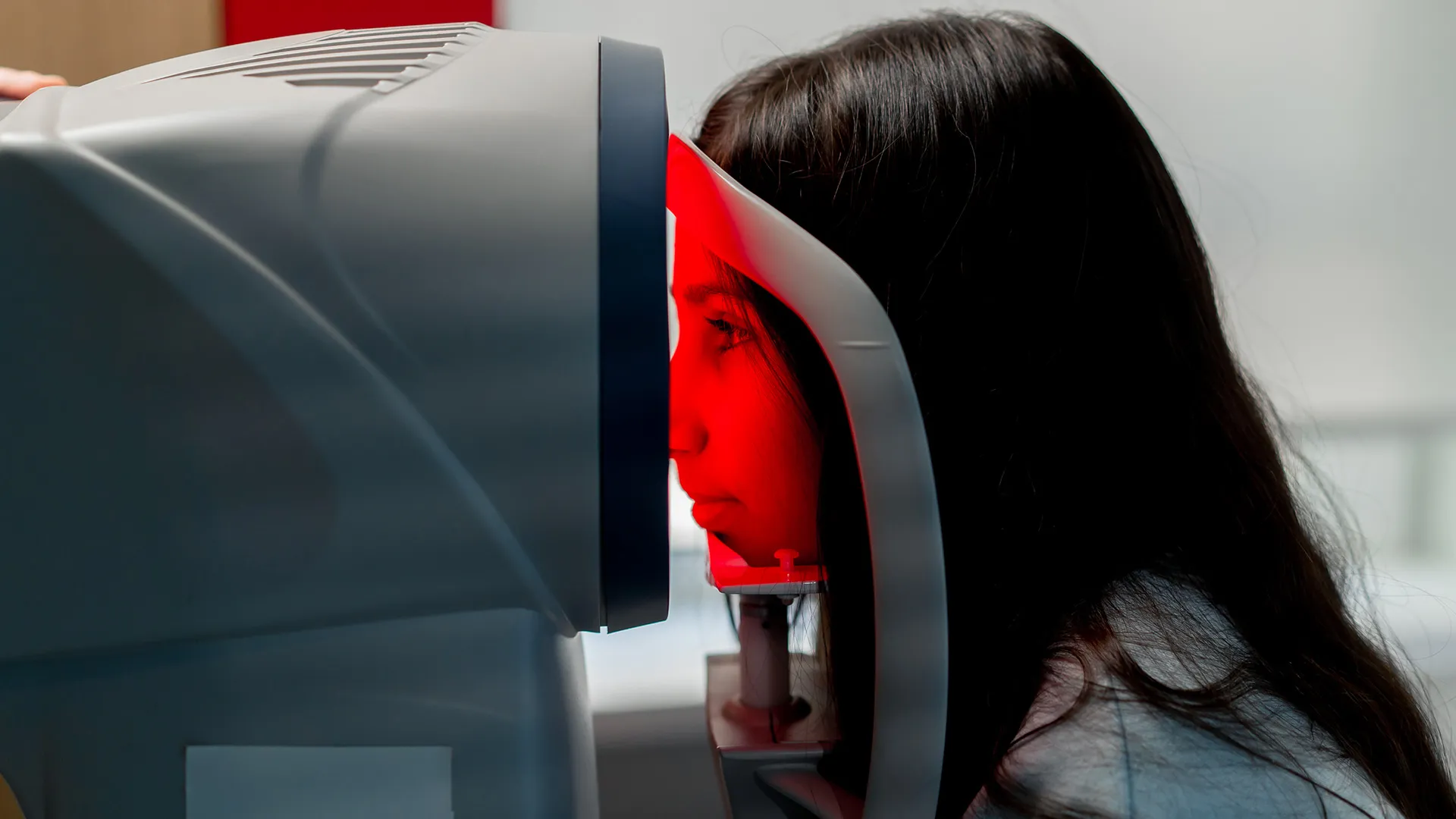
With Optomap digital imaging, instead of looking through the pupil like we would with dilation, the camera sends a scanning laser that sweeps a wide arc across the back of your eye, reaching far more of the retina than the narrow cone a standard view allows. You look into the device one eye at a time; it captures a high-resolution image in a single pass, and the picture appears on our screen seconds later for the two of us to review together. For most patients, the appeal is simple:
- Nothing to recover from. Your vision stays clear the moment you walk out, so you can drive yourself home and get straight back to your day.
- A wide, detailed view in seconds. A single scan captures up to 200 degrees of your retina, around 80%, far more than an undilated pupil allows.
- You see what we see. Your image appears on the screen beside you, so our doctors can point out exactly what’s healthy and walk you through anything worth watching.
- An easy option for nearly everyone. Because the scan works even through smaller pupils, most patients can have it done, making it an excellent option for kids or those who find drops uncomfortable.
- A digital baseline for life. Each image stays in your file, so next year we can compare the two and spot subtle changes early.
Optomap is a wonderful fit for a routine, comfortable look at healthy eyes. As the first clinic in the Southwest Metro to offer it, we’ve spent years refining how we use it, and today it’s the starting point for nearly every exam we do.
What Is a Dilated Eye Exam?
Dilation is the traditional method many patients already know, and it’s worth understanding how it works. It gives your doctor a live view they examine in real time, seeing the retina in true depth all the way to its outer edges. A few drops gently widen your pupil over about twenty minutes, giving your doctor that direct line of sight. Here’s the honest picture of what it involves:
- A short wait and a bright afternoon. Once the drops take hold, they soften your near vision and heighten light sensitivity for four to six hours, so many patients bring sunglasses or plan an easy afternoon.
- A direct, adjustable view. Because your doctor is watching live rather than reading a still image, they can shift the angle in the moment and follow up on anything that catches their eye.
It’s a thorough method, though the temporary blur is one reason many patients are glad a drop-free option exists.
Is an Optomap Exam Right for You?
For the vast majority of patients, a drop-free Optomap scan is all their eyes need, and it’s where our doctors start. And as the American Optometric Association notes, no at-home check replaces a real exam with a doctor who can actually see your retina. Here’s how that plays out across the situations we see most:
| If This Sounds Like You… | How Optomap Helps |
| You’re due for a routine checkup, and your eyes feel healthy. | A quick, drop-free scan gives your doctor a complete retinal screening. |
| You’re short on time or heading straight back to work. | No drops means no blur and nothing to wait out. |
| You want a digital baseline to track your eye health over time. | Each scan is saved to compare year to year, so subtle changes show up early. |
| You’re managing diabetes or another condition that affects the eyes. | A wide, detailed scan lets your doctor monitor your retina thoroughly at every visit. |
| You’ve noticed sudden new floaters, flashes, or a change in your vision. | Come in promptly — we will take a closer look and guide your care from there. |
| You’re 65 or older, or it’s been several years since your last exam. | A comfortable, full-view scan makes it easy to stay on top of your eye health. |
While both tools earn their place, for most patients, Optomap’s quick, drop-free scan is all it takes. As Dr. Suzette Skavlem, optometrist at Wink Family Eye Care, puts it: “The Optomap catches things I wouldn’t want to miss, even in patients who feel fine. It gives me a genuinely thorough look at the retina without a single drop, which is why it’s where we start with nearly everyone.”
Optomap vs. Dilation FAQs, Answered by Our Twin Cities Eye Doctors
Once patients hear they might skip the drops, the questions start. Here are the ones our Chanhassen and St. Louis Park teams answer most:
- Is an Eye Exam Without Dilation Still Thorough?
For most healthy eyes, yes. A single Optomap image captures the optic nerve, the blood vessels, and the wide field of retina where the early signs of glaucoma or diabetic changes first show.
- How Often Should I Get an Optomap Scan? For most patients, once a year at your routine exam is ideal. Because each scan is saved, yearly imaging lets your doctor compare year to year and catch subtle changes early, which is why we make it a regular part of care.
- Can I Ask for an Eye Exam Without Dilation When I Book?Absolutely. Mention it when you schedule, or just let our team know when you arrive, and we’ll set you up for Optomap imaging. There’s nothing extra you need to do to prepare.
Is an Eye Exam Without Dilation Right for You? Let’s Find Out Together
Your eyes deserve a thorough look and an easy afternoon, and at Wink you get both. Whether it’s been a year or several since your last visit, a comfortable, drop-free Optomap scan is a great place to start. Schedule your appointment at our Chanhassen or St. Louis Park office today, and see the difference personalized eye care makes.

 Website by