
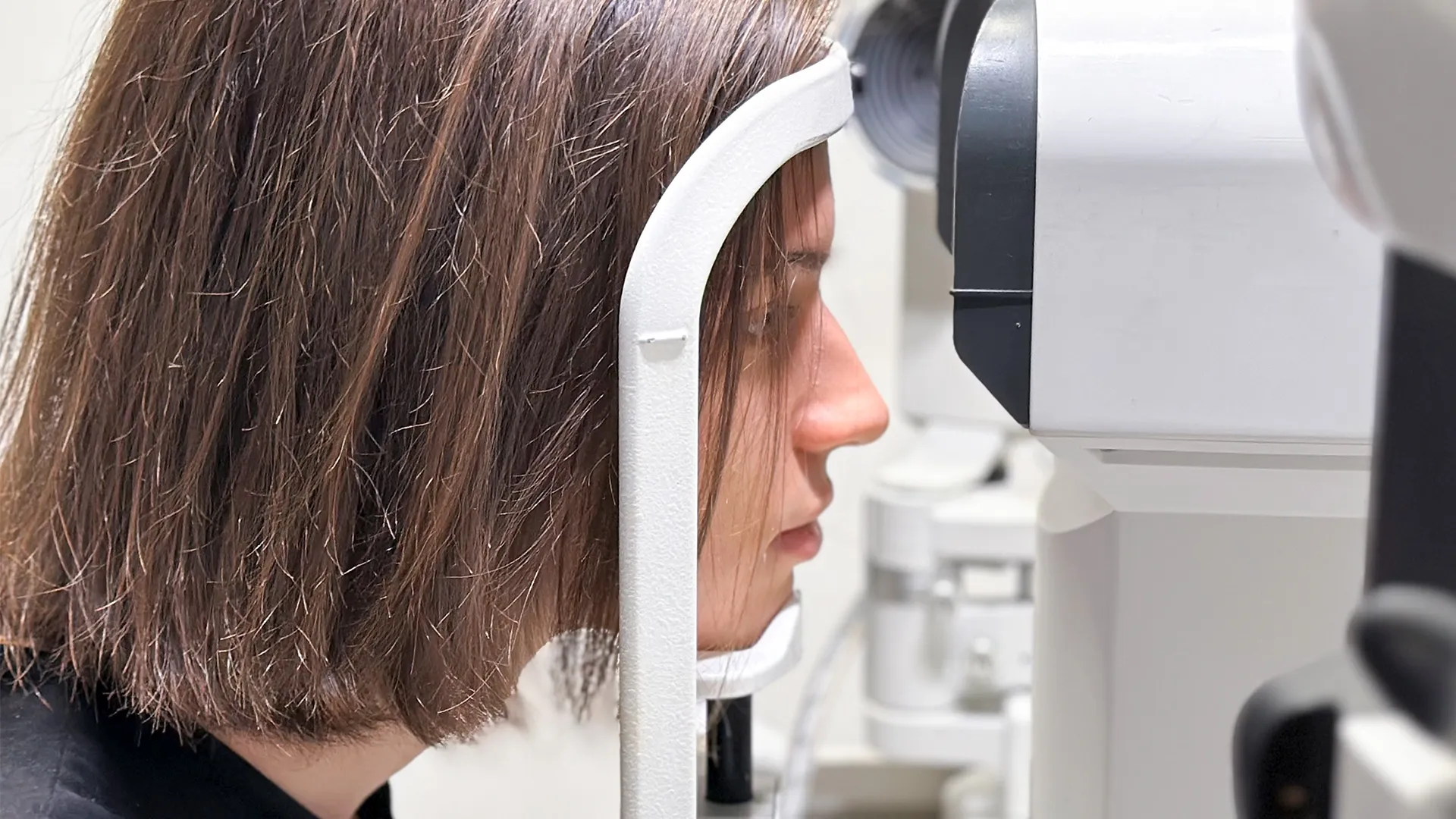
Key Takeaway: A comprehensive eye exam assesses far more than how clearly you see; it’s a full check of your eye health, too. At Wink Family Eye Care, that means fine-tuning your prescription, examining the front and back of your eyes, and screening for conditions like glaucoma before symptoms appear.
You covered one eye, read the smallest line you could, and the clerk waved you through. That quick check at the DMV counter told you enough to renew your license, but it couldn’t tell you whether your eyes are truly healthy. It’s the same gap parents face with those quick school screenings. So what is included in a comprehensive eye exam that these fast checks leave out?Quite a lot. In a single visit, we pin down your exact prescription and check the health of your eyes from front to back, including the optic nerve and retina that a mirror or quick screening won’t show.
What Does a Comprehensive Eye Exam Include At Wink, Step by Step?
Here’s how a typical visit unfolds at one of our comprehensive eye exams, step by step:
- Getting to Know Your Eyes. We start with a real conversation about your screen time hours, whether you’re straining to read menus or road signs, changes you’ve noticed, and any eye conditions that run in your family. These details tell us exactly what to look for before any equipment comes out, so your exam is shaped around your life, not a generic checklist.
- Measuring How You See. We check your distance and up-close sharpness, then fine-tune your prescription. Our clinics use digital phoropters to land your prescription faster and more accurately, so the “which is clearer, one or two?” moments go quickly, even when they look the same.
- Examining the Front of Your Eye. Our doctors use a specialized microscope, called a slit lamp, to closely examine the cornea, eyelids, and eye surface. This is where the earliest signs of dryness or irritation appear, often long before you’d notice them yourself. Catching them early is what keeps them small and easy to treat.
- Checking Your Eye Pressure. A quick pressure reading is a key part of protecting your long-term eye health, so we never skip it. We do, however, skip the dreaded “air puff” in favor of a gentler method. There’s no startling burst of air, just a quick, comfortable reading, because a thorough exam and a comfortable one shouldn’t be a trade-off.
- Looking Inside Your Eye. We examine the retina and optic nerve at the back of your eye, where early signs of conditions like glaucoma often appear first. Our imaging lets us see all of it clearly, without the drops or waiting that used to come with this step.
“During a routine exam, I sometimes spot something small that opens up a much bigger, more meaningful conversation about a patient’s overall wellness. That’s the power of looking at the retina: it’s the only place in the body where we can see nerves and blood vessels directly, a rare view that can reveal the earliest signs of conditions like diabetes or high blood pressure. It’s a good reminder that caring for your eyes and caring for your health aren’t separate things.”— Dr. Katie Hansen, Optometrist at Wink Family Eye Care.
How Does Wink Make the Exam More Comfortable?
We think an eye exam should feel easy from the second you sit down. As the first Southwest Metro clinic to offer Optomap Digital Retinal Imaging, we can now view the back of your eye without dilating it at all, capturing a detailed, high-resolution image of your retina in seconds. This means most of our patients skip the drops, the twenty-minute wait, and the hours of light sensitivity that traditional dilation brings, and since each image stays on file, we can track your eye health year over year. The result is a thorough visit you won’t dread putting on the calendar.
Comprehensive Eye Exam vs. Vision Screening: What’s the Difference?
The two can get mixed up, so here’s the clearest way to think about it: a comprehensive eye exam is a complete evaluation of your vision and eye health, while a vision screening is a quick check to flag obvious vision issues like blurry distance vision or a failed eye chart.
| Comprehensive Eye Exam vs. Vision Screening | ||
| Purpose | Evaluate your vision and eye health | Quickly flag possible vision issues |
| Who Performs It | Licensed optometrist | School nurse, pediatrician, or DMV staff |
| Time | A thorough, unhurried visit | A few minutes |
| What’s Checked | Sharpness, focusing, eye teaming, pressure, and internal eye health | Mainly distance sharpness |
| What It Can Catch | Glaucoma, cataracts, diabetic eye changes, and macular degeneration | Blurry distance vision |
| Prescription | Precise glasses or contact lens prescription | Not provided |
| Great For | The complete picture of your eye health | A fast first flag |
Bottom Line:A screening is a helpful first step, but Minnesota’s health department notes it doesn’t replace a complete eye exam, especially the kind kids get at school. That matters because conditions like glaucoma and diabetic eye changes are often silent at first, which is exactly why a comprehensive exam, backed by our medical eye care, is worth the visit.
How Often Should Adults Get a Comprehensive Eye Exam?
Life gets busy, and eye exams have a way of sliding down the list until something feels off. For adults in the Twin Cities West Metro, staying current is one of the simplest things you can do for your long-term vision, and it takes the guesswork out of when to come in. The American Optometric Association offers helpful guidance:
- Every two years for healthy adults, and yearly after age 65.
- Once a year if you have risk factors like personal or family history of eye disease, or conditions like diabetes.
- Sooner if you notice any change in your vision or comfort; no need to wait for your next scheduled visit.
Wondering about cost? Most vision plans have partial or full coverage for a comprehensive exam, but if you’re unsure, our team can help sort out your insurance before you ever sit in the chair.
FAQ: What Else Should You Know Before Your Eye Exam?
A few things first-time visitors always want to know before they come in:
- How Long Does a Comprehensive Eye Exam Take? Most exams take [Add in Clinic Time Range], depending on what your eyes need. With our Optomap imaging, we often skip the dilation wait, so more time is spent with your doctor, not the waiting room.
- Do I Have to Get My Eyes Dilated? Usually not, and you’ll never be surprised by it. If dilation is the best way to see something specific in your eyes, we’ll talk it through with you first and explain why.
- Can My Whole Family Be Seen at Wink? Yes! Our doctors see patients of all ages at our Chanhassen and St. Louis Park offices, so a parent’s exam and a child’s eye check can happen under one roof, often on the same day. One less thing to coordinate.
- What Should I Bring to My Exam? Bring your current glasses or contacts, insurance card, and a list of medications you take, as some can affect your vision or tear film. Recent records from another clinic help too. We’ll handle the rest.
Your Full Picture of Health Starts at Wink Family Eye Care
Your eyes do quiet, extraordinary work every single day. They also offer one of the clearest views of your overall health, which makes them one of the first places an early change shows up. A comprehensive eye exam checks on all of it at once: your prescription and your eye health, while catching anything that deserves a closer look. Whether it’s been a year or a decade, there’s no better time to schedule an appointment at our Chanhassen or St. Louis Park office today and see the difference personalized eye care makes.
 Website by